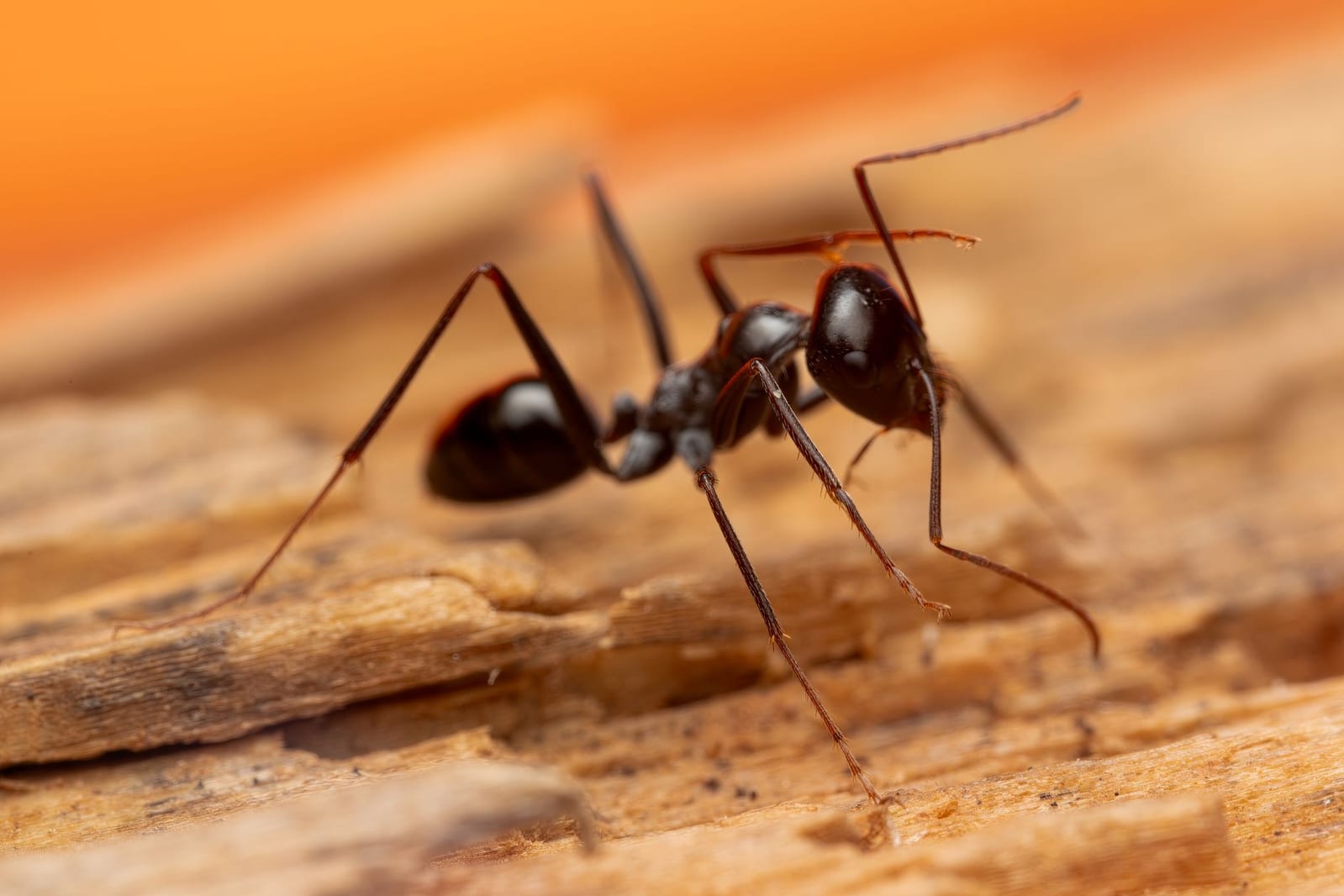
Ant trails marching across a countertop or windowsill are a sign of a colony nearby — and spraying the visible ants does nothing to the nest. Different species need different treatment: pavement and odorous house ants are nuisance foragers, while carpenter ants tunnel into damp wood and can cause structural damage.
Our approach identifies the species first, then deploys baits that foraging workers carry back to the queen and brood, collapsing the colony at its source. For carpenter ants we locate and treat the nest and address the moisture problem that attracted them.
In NYC apartments and brownstones, ants exploit gaps around windows, plumbing and shared walls. We treat the trails and entry points and advise on the food, moisture and access conditions drawing them in.
What kind of ants get into NYC apartments, and what actually stops them?
University of Minnesota Extension explains that carpenter ants do not eat wood — they remove it to create galleries and tunnels for nesting, pushing the chewed-out sawdust outside. Their parent nests are found in moist or decayed wood from water leaks, condensation or poor air circulation, so an indoor carpenter-ant problem usually signals a hidden moisture issue that needs fixing too. (University of Minnesota Extension — Carpenter Ants)
University of California IPM explains why baiting beats spraying for ants: foraging workers carry small portions of bait back to the nest, where it is passed mouth-to-mouth to other workers, larvae and queens, killing the whole colony. Spraying around the foundation only kills the foragers you see, leaving the colony and its queens intact — so it will not provide permanent control. (UC Statewide IPM Program — Ants)
Penn State Extension describes pavement ants — among the most common in NYC — as small workers about 2.5 to 4 mm long, dark brown to black, with parallel furrows on the head. They nest under sidewalks, building slabs and large rocks, and enter buildings through cracks in foundation walls and interior slabs to forage on sweets, grease, dead insects and seeds. (Penn State Extension — Pavement Ant)
Utah State University Extension notes that odorous house ants get their name from the rotten, coconut-like smell they give off when crushed — a quick field test that separates them from look-alike pavement ants. About 3 mm long and brown-to-black, they readily nest indoors and reproduce by budding, where a queen and workers carry brood from an existing nest to start a new subcolony nearby. (Utah State University Extension — Odorous House Ant)
Telling NYC ants apart: pavement vs odorous house vs carpenter
| Feature | Pavement ant | Odorous house ant | Carpenter ant |
|---|---|---|---|
| Size | ~2.5–4 mm (small) | ~3 mm (small) | Among the largest house ants |
| Colour | Dark brown to black | Brown to black | Often dark, narrow waist |
| Tell-tale sign | Parallel grooves on head; soil craters in pavement cracks | Rotten-coconut smell when crushed | Pushes out sawdust; does not eat wood |
| Typical nest | Under sidewalks, slabs; enters via foundation cracks | Indoors and outdoors; spreads by budding | Moist or decayed wood from leaks or poor airflow |
Signs you have a ant control problem
- Steady trails of ants along counters, windowsills, or baseboards
- Ants clustered around sinks, dishwashers, or pet bowls
- Small piles of sawdust-like frass near woodwork (a sign of carpenter ants)
- Winged ants indoors, which can indicate an established nest
Why Washington Heights sees this
Carpenter ants in NYC often signal a moisture problem behind walls or around windows — we treat the colony and point you to the underlying leak.
Apartment ant problems are usually building-wide; we treat shared entry points to stop trails simply reappearing.