Wildlife removal in Harlem: what to know
Harlem's housing is dominated by pre-war apartment buildings, historic brownstones and walk-ups — handsome buildings with deep baseboard gaps, shared wall voids and aging plumbing that let rodents and cockroaches travel freely between units.
The dense restaurant and retail corridor along 125th Street and Lenox Avenue creates constant food-source pressure that feeds rodent and roach populations into the surrounding residential blocks.
Brownstone conversions are especially prone to bed bug spread through shared walls and hallways, and to 'water bugs' rising through old shared plumbing from basements.
Harlem's green edges — Marcus Garvey Park, St. Nicholas Park and Morningside Park — drive the warm-season pressure residents search for most: ants foraging indoors from spring through autumn, spiders moving in around old window frames and basements, and mosquitoes breeding in standing water after summer rain. These are common in ground-floor, garden and brownstone-rear apartments backing onto the parks.
Signs you need wildlife removal
- Scratching or scurrying in the attic, walls, or chimney
- Damaged soffits, vents, or roofline gaps
- Torn insulation or chewed wiring
- Animal droppings in an attic or crawl space
How we treat wildlife removal in Harlem
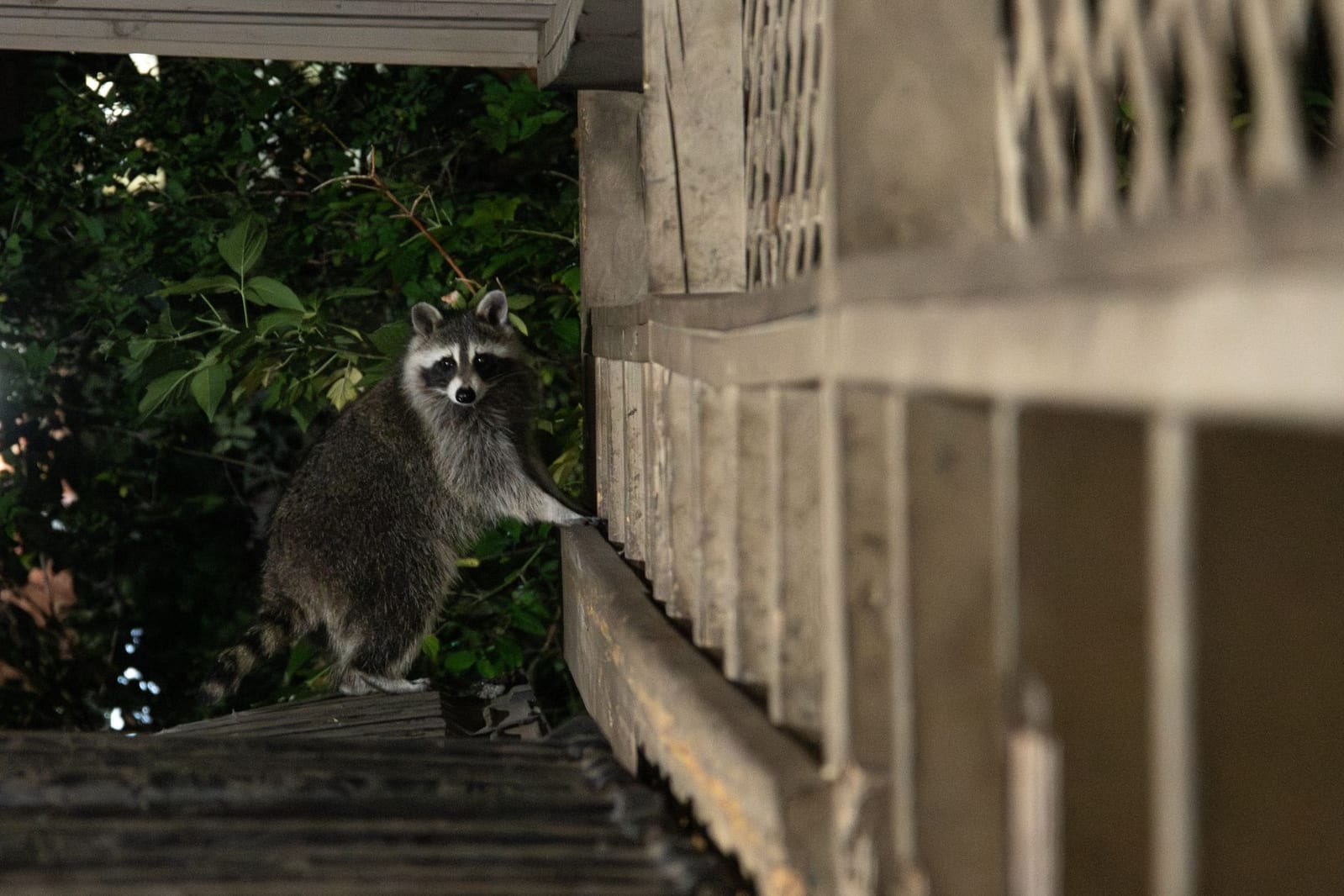
Squirrels, raccoons and opossums get into attics, soffits, chimneys and wall voids — chewing wiring, tearing insulation and creating fire and health hazards. Removing the animal is only half the job; without sealing how it got in, another moves in.
We humanely remove the animal, check for young, and exclude the property — sealing entry points with durable materials so wildlife can't return. We work within New York's wildlife regulations throughout.
Local landmarks & coverage
We serve all of Harlem and the surrounding Manhattan area — including Apollo Theater, 125th Street, Marcus Garvey Park, St. Nicholas Park, Morningside Park, Striver's Row, Lenox Avenue — across ZIP codes 10026, 10027, 10030, 10037, 10039.